Actualités / The CFO under an LBO: between guardian of the temple and architect of transformation
The CFO under an LBO: between guardian of the temple and architect of transformation
Becoming the Chief Financial Officer of an LBO-backed company means embracing a new intensity in how you practice your craft: the pace shifts, and the bar rises. With the arrival of the financial sponsor and the lending syndicate, the stakeholder base widens, each party pressure-testing the figures through the lens of its own interests.
In a leveraged buyout, beyond the traditional remit (accounts, reporting, debt service), the CFO’s role turns strategic: as the owner of the numbers vis-à-vis investors and lenders, they are also the CEO’s business partner. Drawing on a sharp grasp of the company’s value-creation levers, they lead the overhaul of the planning and reporting toolkit, and must anticipate and mitigate macroeconomic and geopolitical risks in an increasingly uncertain environment. Managing cash is no longer enough: liquidity must be forecast, defended, and actively steered in an environment where external variables weigh as heavily as internal levers.
In concrete terms, what deep, structural changes does an LBO bring to the CFO’s role, and how do those who have lived through it describe the experience?
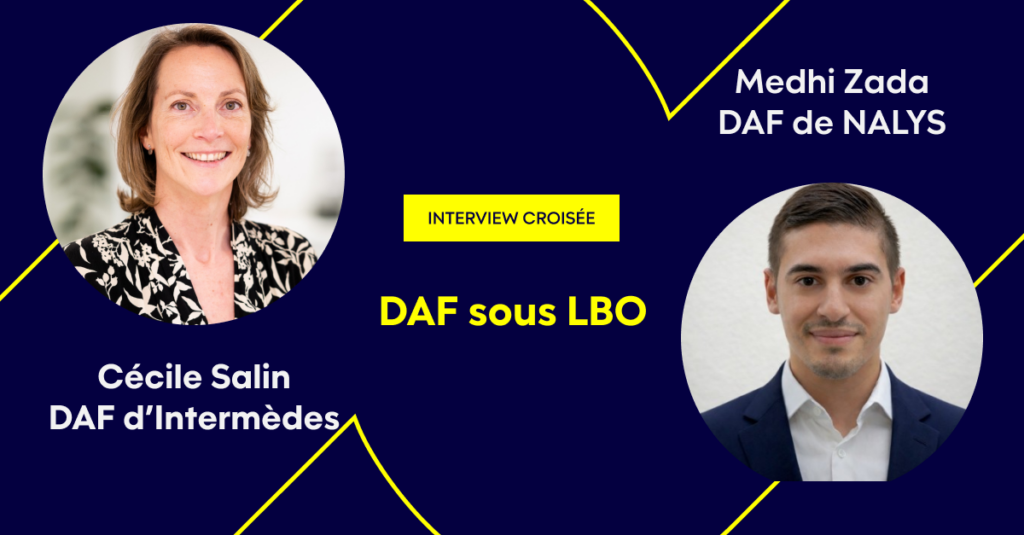
To explore these questions, we gave the floor to Cécile Salin, CFO of Intermèdes, and Mehdi Zada, CFO of Nalys, two of our portfolio companies that have each navigated demanding phases of transformation. Their crossed perspectives offer concrete insight into a role that is often decisive yet rarely brought into the spotlight.
Enjoy the conversation!
Interview The CFO under an LBO: with Cécile Salin
CFO of Intermèdes, and Mehdi Zada
CFO of Nalys